Ebook Free The Third Wave: An Entrepreneur's Vision of the Future, by Steve Case
By saving The Third Wave: An Entrepreneur's Vision Of The Future, By Steve Case in the gizmo, the means you review will certainly likewise be much simpler. Open it and also begin reading The Third Wave: An Entrepreneur's Vision Of The Future, By Steve Case, easy. This is reason why we suggest this The Third Wave: An Entrepreneur's Vision Of The Future, By Steve Case in soft file. It will not disrupt your time to get the book. Furthermore, the on-line air conditioner will additionally relieve you to search The Third Wave: An Entrepreneur's Vision Of The Future, By Steve Case it, even without going somewhere. If you have link net in your workplace, home, or gadget, you could download The Third Wave: An Entrepreneur's Vision Of The Future, By Steve Case it directly. You might not additionally wait to get the book The Third Wave: An Entrepreneur's Vision Of The Future, By Steve Case to send out by the seller in other days.
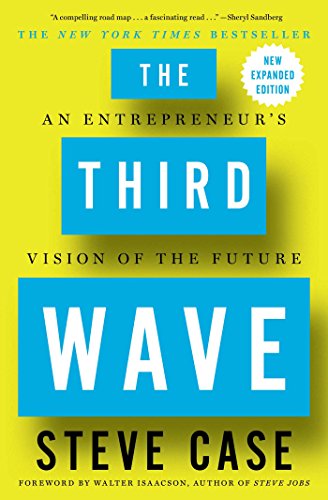
The Third Wave: An Entrepreneur's Vision of the Future, by Steve Case

Ebook Free The Third Wave: An Entrepreneur's Vision of the Future, by Steve Case
The Third Wave: An Entrepreneur's Vision Of The Future, By Steve Case. Learning how to have reading practice is like discovering how to attempt for consuming something that you really don't want. It will certainly need even more times to assist. Moreover, it will certainly additionally little bit force to serve the food to your mouth and also ingest it. Well, as reading a publication The Third Wave: An Entrepreneur's Vision Of The Future, By Steve Case, often, if you need to review something for your brand-new tasks, you will really feel so lightheaded of it. Also it is a publication like The Third Wave: An Entrepreneur's Vision Of The Future, By Steve Case; it will certainly make you feel so bad.
By reviewing The Third Wave: An Entrepreneur's Vision Of The Future, By Steve Case, you can know the understanding as well as things even more, not just concerning exactly what you receive from individuals to individuals. Schedule The Third Wave: An Entrepreneur's Vision Of The Future, By Steve Case will be a lot more trusted. As this The Third Wave: An Entrepreneur's Vision Of The Future, By Steve Case, it will truly provide you the smart idea to be effective. It is not only for you to be success in specific life; you can be successful in everything. The success can be started by knowing the fundamental knowledge and do activities.
From the combo of knowledge and activities, someone could enhance their ability as well as capability. It will certainly lead them to live as well as work better. This is why, the pupils, employees, or perhaps companies must have reading habit for books. Any sort of publication The Third Wave: An Entrepreneur's Vision Of The Future, By Steve Case will certainly provide specific understanding to take all advantages. This is exactly what this The Third Wave: An Entrepreneur's Vision Of The Future, By Steve Case tells you. It will certainly include even more understanding of you to life and function far better. The Third Wave: An Entrepreneur's Vision Of The Future, By Steve Case, Try it as well as show it.
Based upon some encounters of many individuals, it remains in truth that reading this The Third Wave: An Entrepreneur's Vision Of The Future, By Steve Case could help them to make far better option as well as offer more experience. If you wish to be among them, let's purchase this book The Third Wave: An Entrepreneur's Vision Of The Future, By Steve Case by downloading and install guide on web link download in this site. You can get the soft data of this publication The Third Wave: An Entrepreneur's Vision Of The Future, By Steve Case to download and install as well as put aside in your readily available digital devices. Just what are you waiting for? Let get this book The Third Wave: An Entrepreneur's Vision Of The Future, By Steve Case on the internet and read them in whenever as well as any kind of place you will check out. It will certainly not encumber you to bring heavy book The Third Wave: An Entrepreneur's Vision Of The Future, By Steve Case within your bag.
The #1 New York Times and Wall Street Journal bestseller from Steve Case—the co-founder of AOL—presents “a compelling roadmap for the future…that can help us make sense of the technological changes reshaping our economy and the world. A fascinating read” (Sheryl Sandberg, Facebook COO and founder of LeanIn.org).
Steve Case—a pioneer who made the Internet part of everyday life—was on the leading edge of a revolution in 1985 when he co-founded AOL, the first Internet company to go public and the most successful business of the 1990s. Back then Case was an entrepreneur in an industry that hadn’t really been invented yet, but he had a sense how dramatically the Internet would transform business and society. In The Third Wave, he uses his insights garnered from nearly four decades of working as an innovator, investor, and businessman to argue the importance of entrepreneurship and to chart a path for future innovators.
We are entering, as Case explains, the “Third Wave” of the Internet. The first wave saw AOL and other companies lay the foundation for consumers to connect to the Internet. The second wave saw companies like Google and Facebook build on top of the Internet to create search and social networking capabilities, while apps like Snapchat and Instagram leveraged the smartphone revolution. Now, Case argues, we’re entering the Third Wave: a period in which entrepreneurs will vastly transform major “real world” sectors such as health, education, transportation, energy, and food—and in the process change the way we live our daily lives.
Part memoir, part manifesto, and part playbook for the future, The Third Wave explains the ways in which newly emerging technology companies will have to rethink their relationships with customers, with competitors, and with governments; and offers advice for how entrepreneurs can make winning business decisions and strategies—and how all of us can make sense of this ever-changing digital age.
- Sales Rank: #13252 in Books
- Brand: SIMON SCHUSTER
- Published on: 2017-04-18
- Released on: 2017-04-18
- Original language: English
- Dimensions: 8.37" h x .70" w x 5.50" l, .0 pounds
- Binding: Paperback
- 272 pages
Features
Review
“In the Third Wave, Steve Case has drafted a compelling roadmap for the future – one that can help us make sense of the technological changes reshaping our economy and the world. A fascinating read.”
—Sheryl Sandberg, Facebook COO and founder of LeanIn.Org
“I've been waiting to read Steve's story and I wasn't disappointed. His business career is straight out of Horatio Alger and carries important lessons for all entrepreneurs.”
—Warren Buffett, CEO, Berkshire Hathaway
“We are at the beginning of the next industrial revolution where the combination of software and industrial machines is building the foundation for a new wave of innovation. With clarity and passion, Steve provides a manifesto for the future of innovation and entrepreneurship. It's a must read from a visionary leader for entrepreneurs, corporate executives, and anyone trying to succeed during the Third Wave."
—Jeff Immelt, Chairman and CEO, GE
“The Third Wave is essential reading for leaders in business and government, as well as for anybody trying to make sense of our rapidly changing world. I’ve worked with Steve for two decades, and I've always been impressed with his intellect and captivated by his insights. If you read this book, you will be, too.”
—General Colin Powell, former Secretary of State (and former AOL board member)
“Steve Case made history when he created America Online and introduced the Internet to the world. Steve's startup story is captivating, and chock full of important insights and lessons. But this is not a book about the past; it’s a bold and compelling vision for what’s coming next. The Third Wave is required reading for every entrepreneur.”
—Brad Feld, co-founder, TechStars and Foundry Group, author of Startup Life
“A true visionary, Steve Case understood years ago the tectonic shifts that were to occur in society, fueled by technology and acted with purpose and passion. Case’s book, The Third Wave, clarifies for leaders the decisions necessary to thrive in a future increasingly disrupted by accelerating knowledge-creation and sharing.”
– Alvin and Heidi Toffler, authors of the original ‘The Third Wave’
"The Third Wave is an indispensable book for understanding the history of the Internet and preparing for what's next. Entrepreneurs looking to build truly transformational businesses should listen closely to Steve Case's insightful advice."
– Brian Chesky, Co-founder and CEO, Airbnb
“An extraordinarily frank and incisive book from an extraordinary business leader. All budding entrepreneurs, and all who care about the future, should read The Third Wave and heed the lessons as well as the insights.”
—David Rubenstein, Co-founderand Co-CEO, The Carlyle Group
“What’s new and noteworthy here is Case’s effort to draw a connection between his own history and an impending era of change. Moreover, he’s particularly thoughtful on the subject of how digital innovation and existing regulatory regimes will need to work together in the coming decades. . . . There’s little doubt that Case’s insights have value.”
—Jon Gertner, The Washington Post
“Case believes the third wave, which is only just beginning, will have far more impact as the internet transforms real world sectors such as healthcare, education, transport and energy. He shows how existing technologies can be deployed far more smartly rather than assuming that we will see further heroic breakthroughs.”—Financial Times
About the Author
Steve Case is one of America’s most accomplished entrepreneurs—a pioneer who made the Internet part of everyday life and orchestrated the largest merger in the history of business between America Online (AOL) and Time Warner. �Case’s entrepreneurial career began when he cofounded AOL, which became the top performing company of the 1990s. At its peak, nearly half of Internet users in the United States signed on through AOL. As chairman and CEO of�Revolution, a Washington, DC based investment firm he cofounded in 2005, Case partners with visionary entrepreneurs to build businesses such as Zipcar, LivingSocial, Sweetgreen, and many others. Case was the founding chair of the Startup America Partnership—an effort launched at the White House to accelerate high-growth entrepreneurship throughout the nation.�A member of the Presidential Ambassadors for Global Entrepreneurship, Case also serves as Chairman of the Case Foundation, which he established with his wife Jean in 1997.
Excerpt. � Reprinted by permission. All rights reserved.
The Third Wave ONE A WINDING PATH
MY BROTHER Dan was just thirteen months older than me, and a year ahead in school. We shared a room growing up and, like most brothers, were fairly competitive. We hated to lose. That was especially hard for me, since Dan seemed to be good at just about everything he tried. He was the more natural athlete, and always at the top of his class. When I realized I couldn’t compete with him head-to-head, I tried to find interests apart from his. If he was going to play tennis, I decided, I was going to play basketball. But there was one interest we both shared that never felt like a competition. I wanted to be an entrepreneur, I was sure of it, before I even really knew what that meant. And Dan genuinely wanted to help. I got immense satisfaction from coming up with an idea, and he would revel in trying to help me turn it into something real.
We started our first business when I was ten years old. Dan was eleven, and brought to bear all of the wisdom of that extra year in our operation. We called ourselves Case Enterprises, and hoped that no one would notice that neither of us was old enough to drive. We billed ourselves as an international mail-order company. At one point we became the exclusive distributor in Hawaii for a Swiss watchmaker, though I can’t recall actually selling any watches. Most of our efforts involved knocking on doors trying to sell greeting cards to our neighbors. Most of our customers were buying what we were selling just to be nice. But Dan didn’t care. He called it our comparative advantage. Said it was part of our brand. We actually talked like this; our parents, a lawyer and a teacher, had no idea where we got it from. They used to joke that when I went to my room, I was going to my office.
Our early ventures may not have provided much in the way of cash, but they did provide a wealth of experience. And the process of coming up with new business ideas, or new ways to sell, left a deep impression on me. When I left Hawaii to attend Williams College in Massachusetts in 1976, I kept looking for new business opportunities. I started six little businesses while at school, including delivering fruit baskets to students during exam week (paid for by parents, of course). I had a growing interest in the music business, and spent a lot of time in New York clubs like CBGB, trying to find new talent to bring to college campuses.
I was diligent about going to class and doing my homework, but these side businesses were my real passion. That didn’t go over so well at Williams. At one point my advisor pulled me aside and suggested I was spending too much time on my entrepreneurial efforts, and would regret it. “Look at all the educational opportunities in front of you,” I remember him saying. “You should immerse yourself in them. Your business pursuits are distracting, and, frankly, they are ill-suited for campus life.” He wasn’t alone in thinking that. I remember one of my fellow students attacking me in a school newspaper editorial. “I swore I would never go to a Steve Case party or buy a Steve Case record album,” the article began. “It’s nothing personal, it’s just that I despise rampant laissez-faire capitalism on the college campus.”
•��•��•
In my final year at Williams, I took an introductory computer class. I hated it—and almost flunked it. This was still the era of punch cards, where you had to write a program and then take your cards to someone to run them. Several hours later, you’d get the results—which usually (at least for me) meant finding a mistake and starting the process all over again. The tedium, and the resulting low grade, almost prevented me from graduating. And yet the experience stuck with me. The punch cards were a nuisance, but if used the right way, they could be powerful. We were building very basic computational programs, rudimentary by contemporary standards. And yet even then, the potential was obvious. Computers were solving problems in seconds that would otherwise take days, even weeks. Frustrating as it was, in retrospect, I think it was formative. It was the first time I really began to grasp the potential of computers. Still, if I hadn’t stumbled upon Toffler’s book that year, I’m not sure I ever would have pursued the path I did.
With graduation approaching in the spring of 1980, all I could think about was breaking into the fledgling digital industry. I applied for a lot of jobs, always including, with my r�sum�, a cover letter breathlessly predicting the dawn of a digital age.
There were few takers. Most of my letters went unanswered. On a few occasions I did get interviews, but I rarely got past the first one. People seemed put off by my musings, worried that they were getting a nutty young kid who’d never be satisfied in a normal job. As the rejections piled up, I realized that my future would require my keeping my mouth shut—at least for a time. There was not much of a startup culture then, and of course no Internet, either. If I was going to get a job and learn any useful skills, I concluded, I’d have to join a big company. I eventually accepted a job at Procter & Gamble in the brand management department. It was a great place to land, all things considered. I could learn useful skills during the day while continuing to dream about the digital world at night.
If Procter & Gamble knew one thing, it was how to make a product understandable to everyday people. When radio serials were first introduced to the public, P&G saw an opportunity to advertise its home cleaning products to its key audience. So they began sponsoring programs, starting with Oxydol’s Own Ma Perkins back in 1933. They were known as soap operas. When the public jumped from radio to television in the 1950s, so did P&G.
The people I worked with were experts in understanding consumer preferences, doggedly pursuing R&D, and seeking breakthroughs that could give their products an edge against the competition. And they were world-class marketers, often ahead of their time. P&G was also responsible for pioneering the concept of giving away free samples to encourage trial use. (I later borrowed that idea when we launched AOL’s trial program and blanketed the nation with free trial discs.)
•��•��•
After a couple years of working at P&G in Cincinnati, I moved to Kansas to join Pizza Hut as Director of New Pizza Development. To this day, I’ve never had a better title.
My motivation was twofold: First, I was offered a healthy increase in salary and responsibility, and second, I thought it would be helpful to understand how a more entrepreneurial company worked. Pizza Hut was founded in 1958 by two brothers, Dan and Frank Carney, while they were still students at Wichita State University. It had grown from a single location at the corner of Kellogg and Bluff to become the nation’s largest pizza chain, which it accomplished largely by enabling franchisees to innovate. This bottom-up approach to innovation differed from P&G’s top-down style, and I wanted to understand it.
Originally, the job involved my working in the test kitchens in Wichita. But I advocated that we hit the road to find out what was happening throughout the country. My view was that, though innovation was possible within our walls, most of the innovation was happening beyond them. I created and led an advance team, and we started roaming the U.S., looking for a great idea to incorporate into the new menu. The company would send me to places like Washington, DC, put me up in the Four Seasons in Georgetown, and then task me with eating the city’s best pizza. There are worse ways to live. I did learn rather quickly how difficult it was to take something out of a test kitchen and then execute it across five thousand restaurants where the chefs were teenagers with limited skills. A lot of our ideas that made sense in theory flopped in practice.
At the time, one of the concepts we were testing was home delivery. This was 1982, and though pizza was popular, delivery wasn’t yet universal. We were also working on ways to make pizza more convenient and more portable. We spent a lot of time trying to figure out if calzones or pocket pizzas could work as a carry-out option for people on the run. It’s funny to think, looking back on that year, that the things we were focused on—convenience and portability—would become such crucial parts of the company I would later help build. So would our desire to keep things simple and focus on the basics.
I only lasted at Pizza Hut for a year. My obsession with Toffler hadn’t subsided; it had intensified. I wanted to be part of his vision. I needed to find a way in.
MY FIRST STARTUP
I found my opportunity in 1982 when my brother told me about a startup called Control Video Corporation (CVC), which was trying to take the growing electronic gaming industry online. By now, Dan had moved on from CEO of Case Enterprises to up-and-coming investment banker in the Silicon Valley. Neither of us had lost that passion we first explored in childhood. I was still the ideas guy. He was still the one trying to figure out how to make it all work. When the firm he worked for, Hambrecht & Quist, was considering making an investment in CVC, Dan asked me to review the business plan and give him my impressions. I was impressed, I told him. And interested in being a part of it. H&Q did end up investing, and within months, I became a part-time consultant at CVC’s headquarters in the suburbs of Washington, DC.
It was there that I met Marc Seriff, a straight-talking Texan and a brilliant engineer. He had been part of the early team that helped create the Internet in the 1970s, and he was a real visionary with incredible technical skills. Later that decade, he connected with an idea-a-minute entrepreneur, Bill von Meister, and they worked together on building a couple of companies. Von Meister had been a telecommunications pioneer, having founded one of the first online services, The Source. Along with Seriff, von Meister conceived of a business called Home Music Store. Nearly two decades before Napster (and nearly three decades before Spotify), the two were trying to offer digital music to the masses. The idea got a lot of attention in the music industry when it was announced, but they struggled to secure the rights they needed to launch. And some early supporters, like Warner Music, ended up backing out of an agreement to license music for the venture. “Delivering music directly into people’s homes via satellite and cable,” the Warner Music executive argued in 1981, “would completely shut out music retailers, literally choking off their money supply.”
“Retailers are threatening to throw our records in the street!” he exclaimed.
It was clear that there was no budging Warner Music. But they did have a deal with Home Music Store, and they wanted to find an amicable solution. Warner Music suggested that Marc and Bill focus on using their technology to deliver video games instead. “Talk to Atari,” the executive advised. “They’re a division of our same parent company—Warner Communications.”
So the fast-moving von Meister pivoted, and turned his attention toward building an online gaming service called GameLine. The idea was to make a game cartridge, much like Atari’s, but with a cord to connect it to a phone line so you could download and play games for a monthly fee (a primitive Netflix for games).
By January 1983, Marc and Bill were fully in the video game business, and ready to announce their new service. They did so at the Consumer Electronics Show in Las Vegas, tethering a massive hot-air balloon to the roof of the Tropicana, emblazoned with the GameLine logo. I joined the company full-time nine months later, just as the product was coming to market.
It was an utter disaster.
Atari video games turned out to be a fad. After a few go-go growth years, interest in Atari products plummeted. Retailers canceled their GameLine orders. Inventory piled up. (One weekend, we quietly disposed of the tens of thousands of unsold GameLine modems in a dumpster behind our office.) GameLine’s revenues were 95 percent below forecasts, so the CVC board decided to slash costs. Most of the staff lost their jobs. I went from being the youngest person on a seven-person marketing team to being the only one left in the department—mostly, I suspect, because I had the lowest salary. My parents were pretty worried. I’d had three jobs in three years, and now it looked like I would soon need another.
The experience was an early lesson in market timing and managing costs, and a valuable first experience with failure. But while GameLine’s demise was agonizing and shocking, I wasn’t discouraged. My hopes for GameLine had deflated, but my conviction about the digital future remained. I was confident, perhaps na�vely so, that we would figure something out.
To stave off bankruptcy, we sought partners. As an accidental senior leader in the company, I wound up with the job of striking deals wherever I could to keep the company afloat. After dozens of fruitless conversations, we finally made a deal with BellSouth, which had just recently divested from “Ma Bell” (the AT&T Corporation) after an antitrust ruling broke up the phone company. BellSouth provided some funding that kept CVC going for another year, but it became increasingly clear that our strategy of using a customized modem technology had been a mistake.
By the time we entered the market, our technology was outdated. What we’d engineered was a modem technology that was, in essence, download-only. We could send games to consumers, but consumers couldn’t send much data back to us—or to one another. The modems that people were starting to purchase could do both. What we thought was CVC’s core asset—a lower-cost modem technology—turned into one of its greatest liabilities. We offered a proprietary system that few wanted to adopt.
THE (FIRST) REBOOT
So we decided to abandon it and support industry-standard modem technology and the emerging personal computer market instead. We embraced the irony—a modem company with a worthless modem—and we reminded ourselves that we’d never intended to be a hardware company at all. The modem was a means to the real end: becoming a consumer online service company. So we returned to our original mission and exited the hardware business altogether. Instead, we put all of our efforts into what we were good at: crafting easy-to-use software and services that could demystify the online world.
We also decided to rethink our marketing and distribution strategy. Rather than selling services directly to consumers, which was both costly and risky, we decided to partner with personal computer manufacturers to create private-label online services, which they in turn could sell to their customers. We’d build the software and services, they’d package and market them, and we’d share in the revenue.
In theory, it made great sense, and we were excited to get started. But as soon as we began reaching out to potential partners, we realized we had a problem. We kept getting brushed off. Some thought the appeal of getting online would be limited. And those who sensed the potential were unwilling to take the risk of partnering with a young company, particularly one that had a failed product and angry creditors and investors.
We finally found a willing ear at Commodore, at the time one of the leading home computer companies. Commodore’s founder had departed in a huff, and the remaining management team was struggling to figure out a path forward. Competition was intensifying, and they knew they needed a new act, an angle that would allow them to stand out.
Commodore’s head of strategic planning, Clive Smith, was willing to be our advocate, but other executives had concluded it would be too risky to partner with CVC.
“You guys have a ton of baggage and it’s a liability for us,” Clive said, without pulling any punches. “Everyone has a lot of respect for what you guys are trying to do here, but no one wants to get in bed with CVC. There’s just too much risk.”
I asked him for advice. Was there anything we could do to get around it? Any chance for a second shot? There was a silence on the other end of the phone. We were doomed, I was sure of it, and he just didn’t know how to say it.
“I don’t know, Steve,” he finally responded. “Have you thought about starting a new company?”
Oddly, I hadn’t. And yet it seemed so obvious once he said it. A new company would mean more than just a new name. It would mean a clean balance sheet and a clean slate. A genuine fresh start. All we’d need to do was license the software from CVC, move the team over to the new company, and dissolve the old one.
In the summer of 1985, just before my twenty-seventh birthday, we took Clive’s advice and created a new company, Quantum Computer Services. We took over the lease on CVC’s office space in Tysons Corner, Virginia, and hired most of its team. I joined together with Marc Seriff and Jim Kimsey, another CVC executive, as one of Quantum’s co-founders.
Jim was a truly colorful character. Like many of us, he had come to the company with no professional background in technology. He owned a group of bars and restaurants in Washington, DC, and had a lifestyle to match. A graduate of West Point and a veteran of two tours in Vietnam, Jim often laced his sentences with expletives and non sequiturs. He had a thing for quoting historical figures. Nietzsche was a favorite; I must have heard him say “if it doesn’t kill you, it makes you stronger” at least a hundred times. He was twenty years older than most of us and, to the outside world, was clearly seen as the adult in the mix. Our investors referred to him as our “adult supervision.” This served an important purpose in those days, when companies with twenty-somethings hadn’t yet established themselves as a force.
Frank Caufield, one of Jim’s best friends and the co-founder of a young venture capital firm called Kleiner Perkins Caufield Byers (KPCB), had talked to Jim about CVC. Jim got excited about the GameLine vision and bought the franchise rights for the DC region. When KPCB joined H&Q as early investors in CVC, Frank joined the board. When problems emerged with GameLine, Frank asked Jim to step in to try to stabilize the situation and protect KPCB’s investment. Jim agreed to help, even though he didn’t really understand technology—and didn’t really want to. He viewed it as more of an interim stint, figuring he’d help out for a few months as a favor. He ended up doing it for more than a decade.
Without Jim, we wouldn’t have had the ability to raise the capital to survive. And without Marc, we wouldn’t have been able to build the core technology of our product. I played the role of the strategist and hustler, coming up with the ideas, building partnerships, designing many of the consumer-facing aspects of the product, and handling our branding and message. It was the perfect combination of highly complementary skills. And we hoped it would make us a credible bet—particularly because we needed to raise some capital if we were going to pull off the pivot.
•��•��•
We met with our CVC investors and pitched them the plan. They were intrigued but remained skeptical of us. Having just lost their money on our previous effort, they expected a much bigger stake if they were going to take another leap with our team. They didn’t just want to generate a return on their new capital; they were also looking for a payback on their squandered investment. We didn’t want to give up so much of the company, but we knew we had very little choice. In 1985, the startup tech world was still young, and venture investors were hard to come by. If we couldn’t get a deal here, we were going to go out of business.
Our investors had all the leverage, and they used it to their advantage. They crafted a deal wherein they would own virtually all of the company, allowing management to earn some of it back over time, depending on our performance. All told, I don’t think I ever owned more than 3 percent. But it didn’t matter. It had never been about the money, anyway. It was always about the vision. I didn’t like the deal the investors imposed on us, but I was happy to keep the idea alive—and delighted to have another shot at building a business.
We were able to launch Quantum with just a million dollars of new capital, largely because we were able to leverage partnerships to minimize our marketing costs. We customized our pitch for each PC company, and we started small. First we struck a deal with Commodore to create a gaming-centric service called Q-Link for their vast base of Commodore 64 computer users. That helped us negotiate a partnership with RadioShack to create PC-Link, a downloading service that leveraged their graphical user interface. We later convinced IBM to partner with us to create an educational service called Promenade. Each company had its own unique brand and tailored offering, but their online services would all be built and run by us.
This time it worked. We kept costs low and were able to achieve profitability in our second year of business. And while growth was modest, it was steady. We believed that the best way to jump-start our growth was to secure a major partnership—so we set our sights on Apple.
THE KINGS OF CUPERTINO
I rented an apartment in San Francisco in 1987 and showed up at Apple’s headquarters every day—for six months. I buttonholed everybody I could within Apple to try to interest them in the nascent online market. I would tailor my pitch, depending on which team I was talking to, trying to come up with the perfect reason for them to partner with us. Ultimately, the group that was most interested was probably the group that had the least power and influence within the company: the customer service group.
My pitch to them was straightforward: If you launch this service and bundle it with your computers, it’ll be a cheaper, better way to provide customer service to Apple customers than staffing large call centers to handle phone calls. “Oh, and by the way,” I would add, “in addition to the customer service benefit, we can provide a suite of other services that will make it compelling for consumers and help differentiate Apple.”
The pitch resonated well with them. The people I was dealing with saw it as a way to be strategic, to strengthen their position within the company. On the one hand, they knew that their involvement was predicated on the partnership’s being about customer support. But they also saw that there was a broader opportunity—and that if online services took off, this was something that could transform their customer service department from being a drain to a profit center. A career-accelerating move, to be sure. So we seemed equally motivated to make the partnership work.
Had Steve Jobs been at Apple at the time, I suspect the deal would never have happened. Steve never would have licensed the Apple name or allowed such a critical decision to be made by lower-level executives. But Steve had been fired by Apple a couple of years earlier, so we had an opening. Six months after I’d moved to San Francisco, we finally inked a deal to build the service. It would be called AppleLink Personal Edition.
I moved back to DC, where the team greeted me like a conquering hero. Securing a partnership with Apple and convincing them to license their brand name to us was a coup. With Apple’s commitment and endorsement, we were able to bring in a $5 million round of funding—the most we had ever raised. We opened a Cupertino office not far from Apple’s headquarters so that our people could work in close collaboration with theirs. And we ramped up hiring to handle the Apple launch, which was going to be our biggest ever.
Once the early software prototype was ready, I had the chance to sit down with Alan Kay, one of the pioneers of the early computing era, to get his advice. In the 1970s, Kay was part of the team at Xerox PARC (Palo Alto Research Center) responsible for designing a programming language called Smalltalk, which could be used to network computers together and would later help inspire Apple’s early Macintosh computers. When I met with him, he was working as an Apple Fellow, living in Los Angeles. I flew down to get his take on our design and to ask for guidance in making the software more intuitive, something that was his—and Apple’s—specialty. It was an honor to sit with such a legend. But it would turn out to be one of the very few good days I had working with Apple. The honeymoon was short-lived.
We spent a year building the AppleLink service, and geared up for an ambitious (and expensive) launch. But from the beginning, our companies clashed. Apple wanted to sell the software and limit distribution to authorized Apple stores. We thought that approach was a terrible idea and ran counter to our whole strategy. We wanted to give the software away for free—in a wide range of retail stores, pre-installed on Apple computers, bundled with magazines and modems, and sent by mail. We wanted to make the initial trial free, too, so that it would be easier to convince people to try the service. We needed paying customers—but that meant making it as easy as possible for consumers to try us. (It’s ironic that two decades later, Apple’s success would be propelled by free software in their App Store.) We argued bitterly for months, battling over various marketing approaches, without ever finding common ground. It bred frustration and distrust, and a growing skepticism inside Apple.
I was late to the office one morning; there’d been an accident near Dulles Airport, and traffic was backed up for miles. When I arrived, there was a note from my assistant on my desk marked “urgent.” A senior executive at Apple wanted to speak to me, she said, and he didn’t sound happy. On its face, there was nothing that unusual about the message. We’d been arguing with Apple for months, and I’d gotten an earful from plenty of their executives. I didn’t realize they’d be asking for a divorce.
“Listen, Case, bottom line is this,” the executive said sharply, when I finally called him back. “This was a mistake, and we need to cancel the deal. We’re out. It’s over.” I tried to change his mind, to see if there was any alternative, but even as the words came out, I knew it was futile. We were never going to see eye to eye on strategy, and each was convinced the other was wrong.
It was over. Really over. And none of us had any idea what to do.
Most helpful customer reviews
84 of 90 people found the following review helpful.
An exceptional vision of what's to come when the Internet integrates into everything we do
By E R Baird
Steve begins the "Third Wave" with a nod to Alvin Toffler's book of the same name, which Steve read early in his career. Toffler's Third Wave described how the Information Revolution would transform society similarly to the Industrial Revolution and the Agricultural Revolution before. (In a nice nod to history, Toffler wrote a blurb at the beginning of this book). What's remarkable about this book is not that Steve Case predicts THAT the Internet will transform our lives in ways we haven't seen, but in great detail, he outlines HOW.
Steve Case, the founder of AOL who was responsible for the first Internet experience of many people (including me and probably many folks reading this review), outlines his vision of "The Third Wave" of the Internet. The First Wave was what AOL and others did in the 1990s--just getting people online. The Second Wave, the Wave of Google, Facebook, Twitter, and more, created a flurry of people using the Internet to communicate and share information--but when you think about it, Steve says, the Internet has barely begun to transform the way we live our everyday lives. Our food, health care, education, and energy systems are pretty much the same as they were before the Internet--with slightly better information-sharing and communication. In the Third Wave, the Internet will integrate into everything we do.
As Steve begins to predict how, he artfully and entertainingly outlines his lessons learned from AOL--successes and failures--as he sees many parallels between the Third Wave and the First Wave (when he and others built AOL). The stories still hold very real applications to entrepreneurs today. Unlike some books that make vaguely interesting predictions but don't go into detail, Steve then refreshingly and creatively goes into detail of HOW the next wave of the Internet will transform our lives, highlighting the "Rise of the Rest," how the changing face of the Internet will transform entrepreneurial opportunity outside of hubs that have won the Second Wave such as San Francisco and Boston. If you read the newspaper headlines or listen to any political candidates, you'd think that the economy in most cities in the world is a lost cause, but Steve convincingly portrays a different story. Highlighting startups from New Orleans to Nairobi, the Third Wave illustrates how cities you wouldn't expect are changing the face of how industries rise and economies grow, and anyone who cares about the future of technology needs to pay attention: the next great innovations in food systems, for example, could be more likely to come from Louisville or St. Louis than they are from San Francisco.
The book also outlines the rise and importance of "impact investing," detailing how as the Internet integrates into our lives, the very nature of technology startups will change from seemingly frivolous apps that help us order food to areas that we have more traditionally thought are the realm of government or nonprofit--the areas that matter most, such as how we educate our kids and how we power our planet. Over the past 30 years, many tech entrepreneurs have been building companies with the sole purpose of creating as much financial value as possible; in the "Third Wave," we're starting to see an exponentially increasing group of people seeking to create social value as well.
Finally, the book is a bit of a warning: Steve outlines how, after traveling thousands of miles across the country, venture capitalists, politicians, leaders in big corporations, and entrepreneurs alike have no idea how the Internet is about to change. People are building companies and making policy as if the way things work today will go on forever. Take financial services, for instance. Politicians talk about either "breaking up the banks" or regulating them less to ensure economic growth, and large banks spend incredible sums of money protecting advantages of incumbency, but technology startups are already literally breaking the functions of banks--lending, credit scoring, wealth management, payments, and more--into faster, more personalized services that everyday people are jumping on top of. Sectors such as health and energy are ready for similar disruption.
So--what do we do in the face of the changing Internet? The final chapters helpfully outline whether you're in policy, a founder, an investor, or just someone looking to get involved in the next wave of the Internet. One of the best parts of the book is Steve telling his own story, as the Head of Pizza Development for Pizza Hut, hacking his own way into the early circles of people building the Internet in what he calls the "First Wave." This book is a useful, clear, specific way for people inspired to do the same in the Third Wave.
If you're intrigued with how the Internet will transform our lives over the coming decades, interested in a roadmap for what the changing economy looks like, or just want a great story, pick up this book.
3 of 3 people found the following review helpful.
Steve Case classic American hero
By F. Payan
After reading this book I will do everything I can to behave like an entrepreneur. Steve Case lays out that third wave entrepreneurs will lead the US economy forward by collaborating with government creating a win-win for the US through breakthrough investments in healthcare, education and financial services. This book should be part of high school and college classes on entrepreneurship. America needs more of the Steve Case types and fewer politicians.
1 of 1 people found the following review helpful.
Must read this book to catch the wave!
By Andrea Samadi
I am so glad I found this book, on a list on the best summer reading books for business. I've followed Steve and Jean Case with their Foundation and Be Fearless Campaigns and when I read "Third Wave" I was energized, empowered and confident I will be a leader that impacts educational reform in the next 5-10 years. Thank goodness for this roadmap! Thank you for the tips, diagrams, stories, ideas, warnings, thoughts and steps that you can foresee leaders of this wave will need to take. I've sent the diagram framework to everyone I know in my circles, have reached out to leaders you've mentioned are making inroads and know with your insight, partnerships in forming..I will be on this wave helping reform education. Thank you for this playbook!
See all 228 customer reviews...
The Third Wave: An Entrepreneur's Vision of the Future, by Steve Case PDF
The Third Wave: An Entrepreneur's Vision of the Future, by Steve Case EPub
The Third Wave: An Entrepreneur's Vision of the Future, by Steve Case Doc
The Third Wave: An Entrepreneur's Vision of the Future, by Steve Case iBooks
The Third Wave: An Entrepreneur's Vision of the Future, by Steve Case rtf
The Third Wave: An Entrepreneur's Vision of the Future, by Steve Case Mobipocket
The Third Wave: An Entrepreneur's Vision of the Future, by Steve Case Kindle
The Third Wave: An Entrepreneur's Vision of the Future, by Steve Case PDF
The Third Wave: An Entrepreneur's Vision of the Future, by Steve Case PDF
The Third Wave: An Entrepreneur's Vision of the Future, by Steve Case PDF
The Third Wave: An Entrepreneur's Vision of the Future, by Steve Case PDF


